
How Long Does a Roof Really Last?
A Material-by-Material Lifespan Guide

If you've ever looked up at your home and wondered whether your roof is getting old, you're asking the right question at the right time. A roof is one of the biggest investments you'll make in your home, and knowing how much life is left in it can save you a lot of money and stress down the road.
The honest answer to "how long does a roof last?" is: it depends. Roof lifespan is shaped by the material you chose, the quality of the installation, how well your attic is ventilated, how consistently the roof has been maintained, and the kind of weather your home faces year after year. Two identical homes on the same street can end up needing a roof replacement years apart simply because of these factors. And here in Ohio, that last factor — weather — carries more weight than a lot of homeowners realize.
Here's the most important thing to keep in mind before we dig in: no roof lasts forever, and you shouldn't wait until you see a leak to start paying attention. By the time water is dripping into your living room, the damage has often been building quietly for a while. A little awareness now goes a long way.
Roof Lifespan by Material
Different roofing materials age very differently. Below is a realistic look at the most common options in residential roofing, along with the typical lifespan you can expect when the roof is properly installed and reasonably maintained.
Asphalt Shingles: 20–25 Years
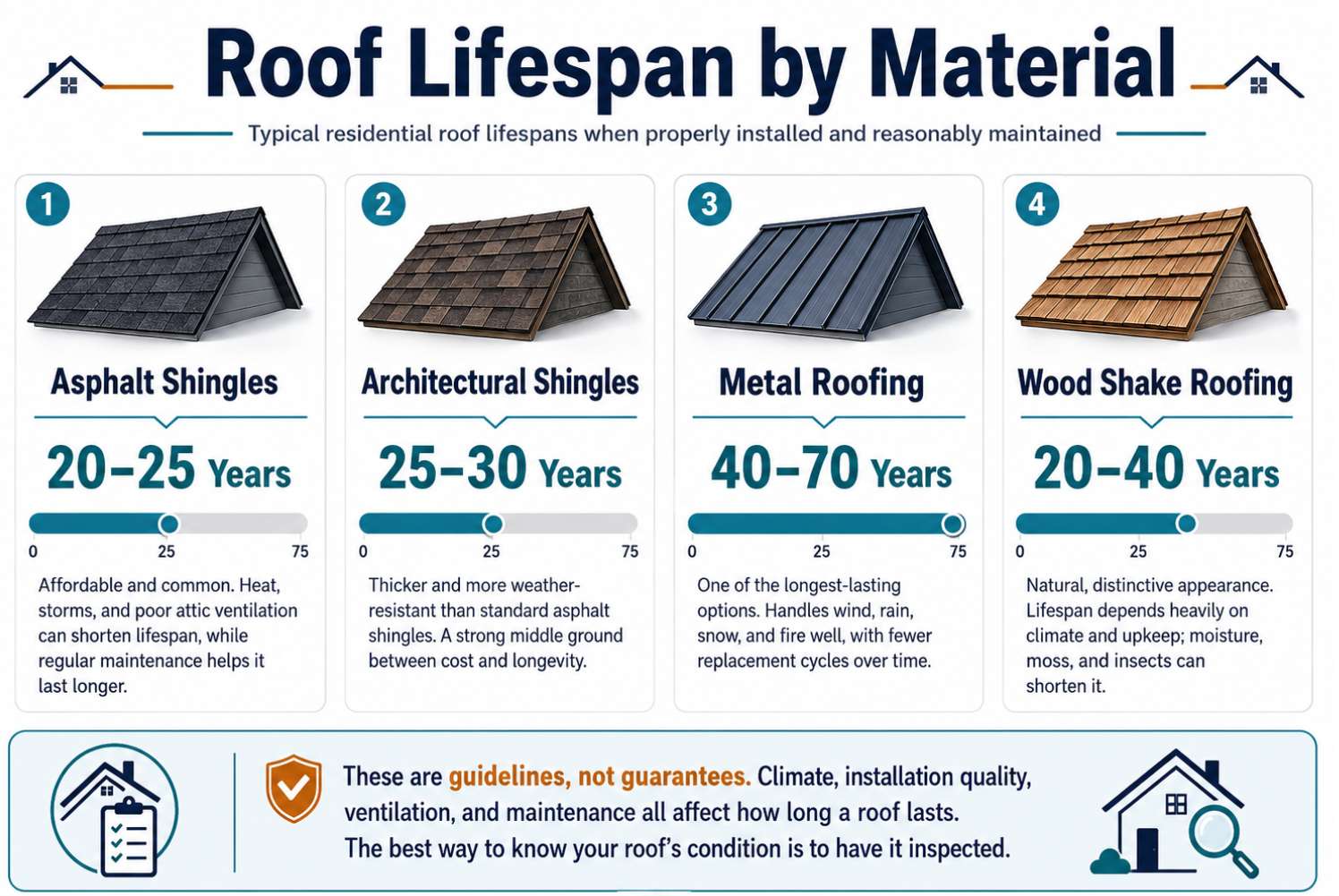
Traditional three-tab asphalt shingles are the most common roofing material on American homes, and for good reason — they're affordable and they get the job done. The typical asphalt shingle life expectancy is around 20 to 25 years. Hot climates, heavy storms, and poor attic ventilation can pull that number down, while good maintenance can help you reach the upper end of the range.
Architectural Shingles: 25–30 Years
Architectural (or "dimensional") shingles are a step up from standard asphalt. They're thicker, heavier, and more resistant to wind and weather, which is why they often last 25 to 30 years depending on the specific product and the quality of the installation. Many homeowners choose them as a middle ground between cost and longevity.
Metal Roofing: 40–70 Years
Metal roofing is one of the longest-lasting options available for homes. A well-installed metal roof can last anywhere from 40 to 70 years, easily outliving several rounds of asphalt shingles. Metal stands up well to wind, sheds snow and rain efficiently, and resists fire. The higher upfront cost is often offset by how rarely it needs to be replaced.
Wood Shake Roofing: 20–40 Years
Wood shake roofing offers a distinctive, natural look that many homeowners love. Its lifespan ranges widely — roughly 20 to 40 years — and depends heavily on climate and maintenance. Wood does best in drier climates and needs regular upkeep to prevent rot, moss, and insect damage. In damp or heavily shaded settings, it tends to age faster.
A quick note on all of these ranges: they're guidelines, not guarantees. Your specific roof could last longer or wear out sooner — and where you live plays a big role. The only way to know where yours truly stands is to have it looked at.

How Ohio's Seasons Affect Your Roof
Those national lifespan ranges assume average conditions, but Ohio roofs don't live an average life.
Our four distinct seasons put roofing materials through a yearly stress test, and that wear tends to land Ohio roofs toward the lower end of their expected lifespan rather than the upper end.
The biggest culprit is the freeze-thaw cycle. Ohio winters swing repeatedly above and below freezing, sometimes within the same day. Water works its way into small cracks and under shingles, freezes, expands, and pries those gaps wider — then thaws and does it all over again. Over a winter, that cycle can turn a minor flaw into a real leak. Ice dams add to the problem: snow melts near a warm roofline, refreezes at the cold eaves, and backs water up under the shingles.
The other seasons take their turn, too:
Spring brings heavy rain, hail, and the severe thunderstorms and high winds that move through the Ohio Valley, all of which can lift, crack, or strip shingles.
Summer delivers heat and humidity that bake shingles and, combined with poor attic ventilation, accelerate aging from below.
Fall drops leaves and debris that clog gutters and trap moisture against the roof, setting the stage for the freeze-thaw damage to come.
The practical takeaway for Ohio homeowners: don't assume your roof will quietly reach the top of its national lifespan range. Our weather is hard on roofs, which makes regular inspection — especially after winter and after spring storms — more important here than in milder climates.
What Can Shorten a Roof's Lifespan?
Plenty of roofs never reach the lifespan their material promises — and it's usually not the material's fault. Here are the most common culprits that age a roof prematurely:
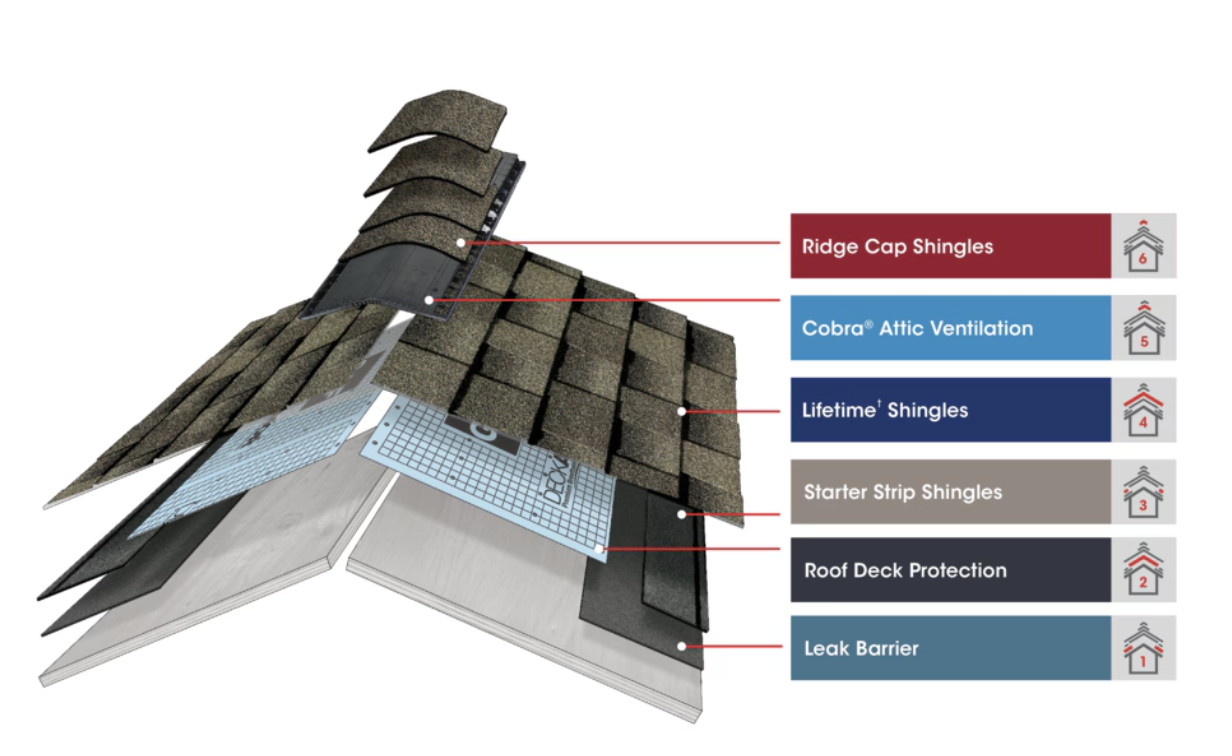
Poor attic ventilation. Trapped heat and moisture in the attic cook shingles from underneath and encourage rot, dramatically shortening roof lifespan.
Low-quality installation. Even premium materials fail early when they're installed incorrectly. Workmanship matters as much as the product.
Storm damage. Hail, high winds, and extreme weather can damage a roof in a single afternoon, sometimes in ways that aren't obvious from the ground.
Lack of maintenance. Small issues left unaddressed — a few loose shingles, clogged gutters — tend to snowball into bigger, costlier problems.
Cheap materials. Bargain materials may save money today but often wear out years ahead of schedule.
Improper flashing. Flashing seals the vulnerable areas around chimneys, vents, and valleys. When it's installed poorly or left to corrode, leaks follow.
Tree debris and moisture buildup. Overhanging branches drop leaves and debris that trap moisture against the roof, inviting rot, moss, and decay.
The good news is that most of these are preventable or catchable early with routine attention.
Warning Signs Your Roof May Be Near the End
Roofs usually give you hints before they fail. If you notice any of the following, it's worth taking a closer look:
Curling, cracked, or missing shingles — a sign the material is breaking down or has been damaged.
Granule loss — bald spots on shingles, or granules collecting in your gutters, mean protection is wearing thin.
Leaks or water stains — brown spots on ceilings or walls point to water getting past the roof.
Sagging areas — a dip or sag in the roofline can signal structural or moisture problems underneath.
Moss or algae growth — beyond looking unsightly, moss holds moisture against the roof and accelerates decay.
Higher energy bills — a creeping increase can hint at poor attic ventilation or insulation tied to roof issues.
Roof age approaching its expected lifespan — if your roof is closing in on the upper end of its material's range, it's wise to start planning ahead.
Spotting one of these doesn't always mean you need a full roof replacement. Sometimes a targeted repair buys you years. But it's a clear cue to get a professional opinion rather than guess.
Why a Professional Roof Inspection Is Worth It
A lot can be happening on a roof that you simply can't see from the driveway. A professional roof inspection gives you a clear, honest picture of your roof's real condition — what's holding up well, what's wearing down, and how much useful life is realistically left.
The biggest value of an inspection is timing. Catching a lifted shingle, a small flashing gap, or early ventilation trouble is inexpensive to fix. Discovering that same problem after it's let water into your attic, insulation, and ceilings is a much larger project. An evaluation helps you plan a roof replacement on your own schedule and budget, rather than scrambling after an emergency.
It also helps you make confident decisions. Instead of wondering whether your roof has five years left or five months, you get a grounded assessment from someone who looks at roofs every day.
Frequently Asked Questions
-
There's no single answer, because it depends on your material and conditions. Asphalt shingle roofs are commonly replaced every 20 to 25 years, while metal roofs can last several decades longer. The better habit than watching the calendar is having your roof inspected periodically so replacement is based on actual condition, not just age.
-
Yes. Quality installation, good attic ventilation, regular maintenance, and a mild climate can all push a roof toward — or even past — the top of its expected range. The reverse is also true, so an inspection is the best way to know where yours stands.
-
Not necessarily. Many leaks come from a localized issue like damaged flashing or a few bad shingles and can be repaired. But a leak on an older roof, or repeated leaks, often signals that broader wear is setting in and replacement should be considered.
-
Storm damage isn't always visible from the ground — hail bruises and wind-lifted shingles can be subtle. After a significant storm, it's smart to have your roof checked, since unaddressed damage tends to worsen over time.
-
Often, yes. Ohio's freeze-thaw cycles, ice dams, summer heat, and spring storms put roofs under more stress than milder climates do, which tends to push lifespans toward the lower end of the national ranges. That's why regular inspections — especially after winter and spring storm season — matter so much for Ohio homeowners.
-
It can. A properly installed roof with good attic ventilation helps regulate temperature and reduce strain on your heating and cooling, which may show up as more stable energy bills over time.
Find Out Before Small Issues Become Big Ones
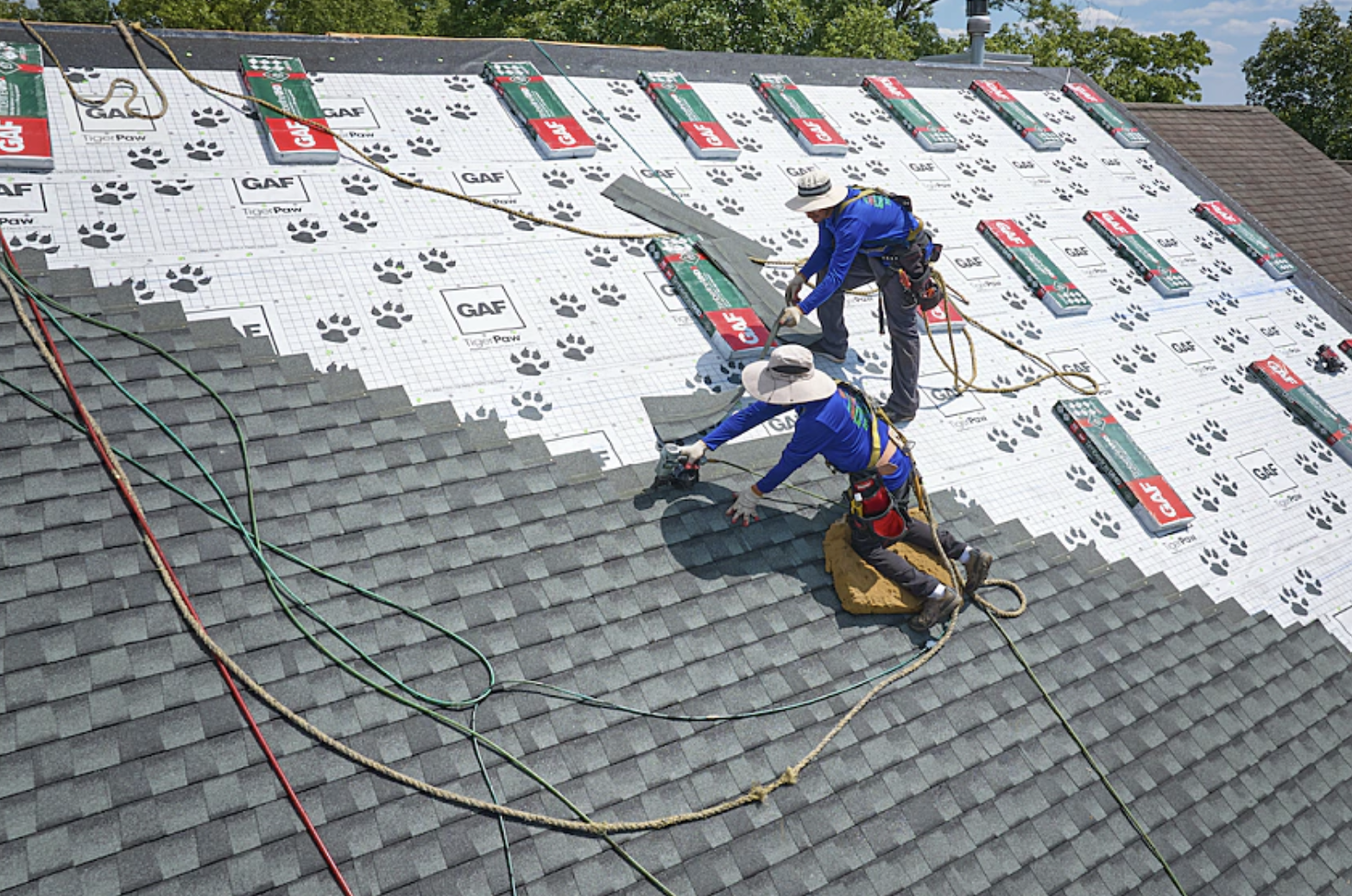
Your roof is doing important work every single day, and a little attention now can spare you a major headache later. Not sure how much life is left on your roof?
RoofNut offers Complimentary Roof inspections — find out before small issues become big ones.