Board and Batten Siding in Columbus: A Homeowner’s Guide to James Hardie
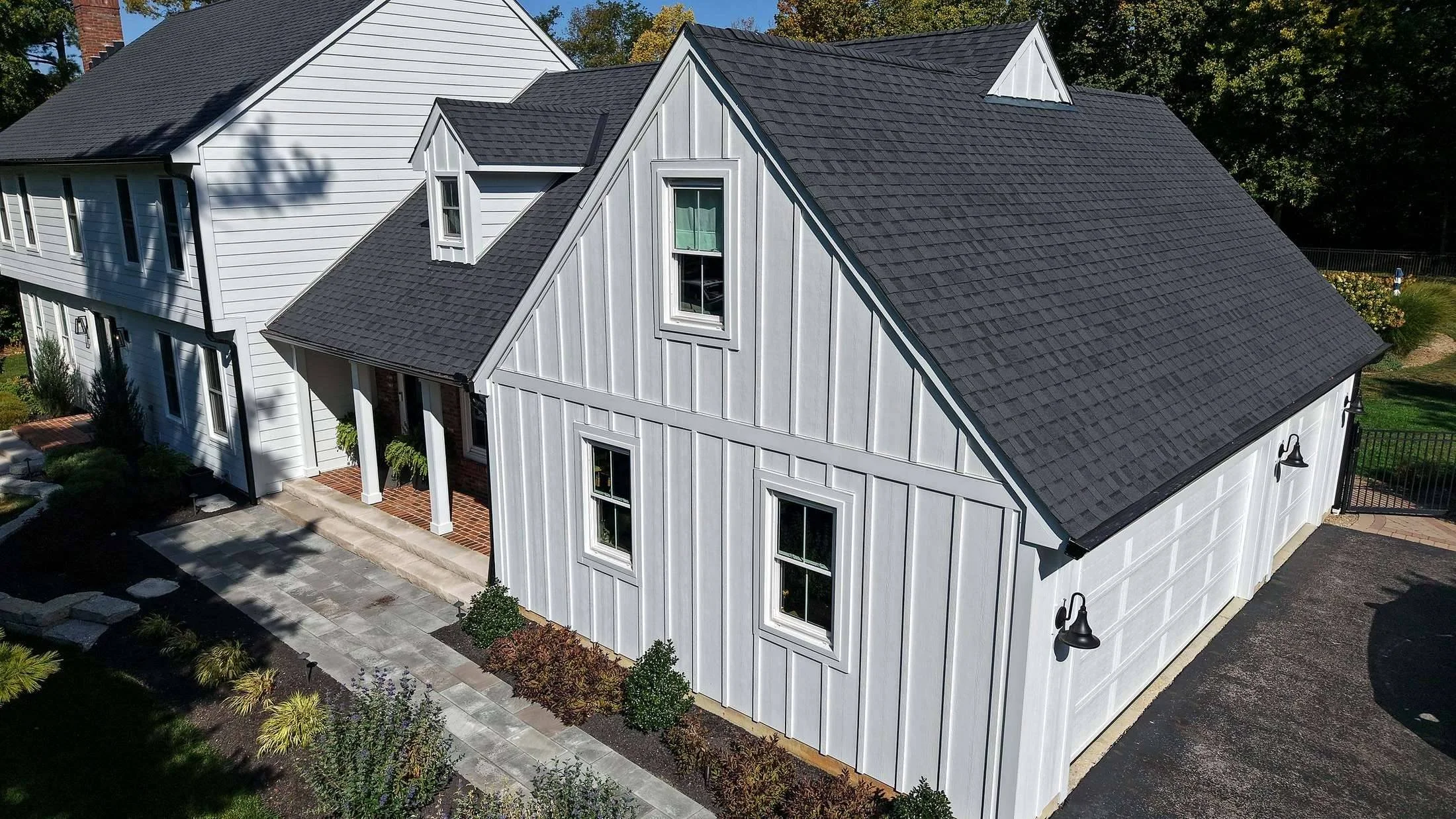
A recent RoofNut James Hardie board and batten project in Dublin. Photo: RoofNut
Board and batten siding in Columbus has gone from farmhouse niche to neighborhood favorite.
You've seen it. Crisp vertical lines on a new build in Dublin. A modern gable accent on a ranch in Hilliard.
And you've probably wondered: would that work on my house?
Here's the frustrating part. Most of what you find online is either a mood board or a sales pitch. Very little tells you how to actually get it right.
We're RoofNut, a locally owned roofing, siding, and gutter company in Hilliard, formerly AC Roofing & Siding. We're James Hardie certified, and we'd like to give you the straight version.
What is board and batten siding?
Wide boards. Narrow strips. Simple idea.
Board and batten is a vertical siding style that pairs wide panels with narrow strips, called battens, covering the seams. The result is a pattern of strong vertical lines and shadow. It started on barns and cottages and now shows up on farmhouse, craftsman, and modern homes all over Central Ohio.
The concept is old. The look is anything but.
Vertical lines make a home feel taller. Shadows give it depth. And the spacing between battens changes the whole personality of the house.
Tight spacing feels traditional. Wider spacing feels clean and modern.
Same style. Very different moods.
Why choose James Hardie for board and batten siding in Columbus?
The look of wood. Without the wood problems.
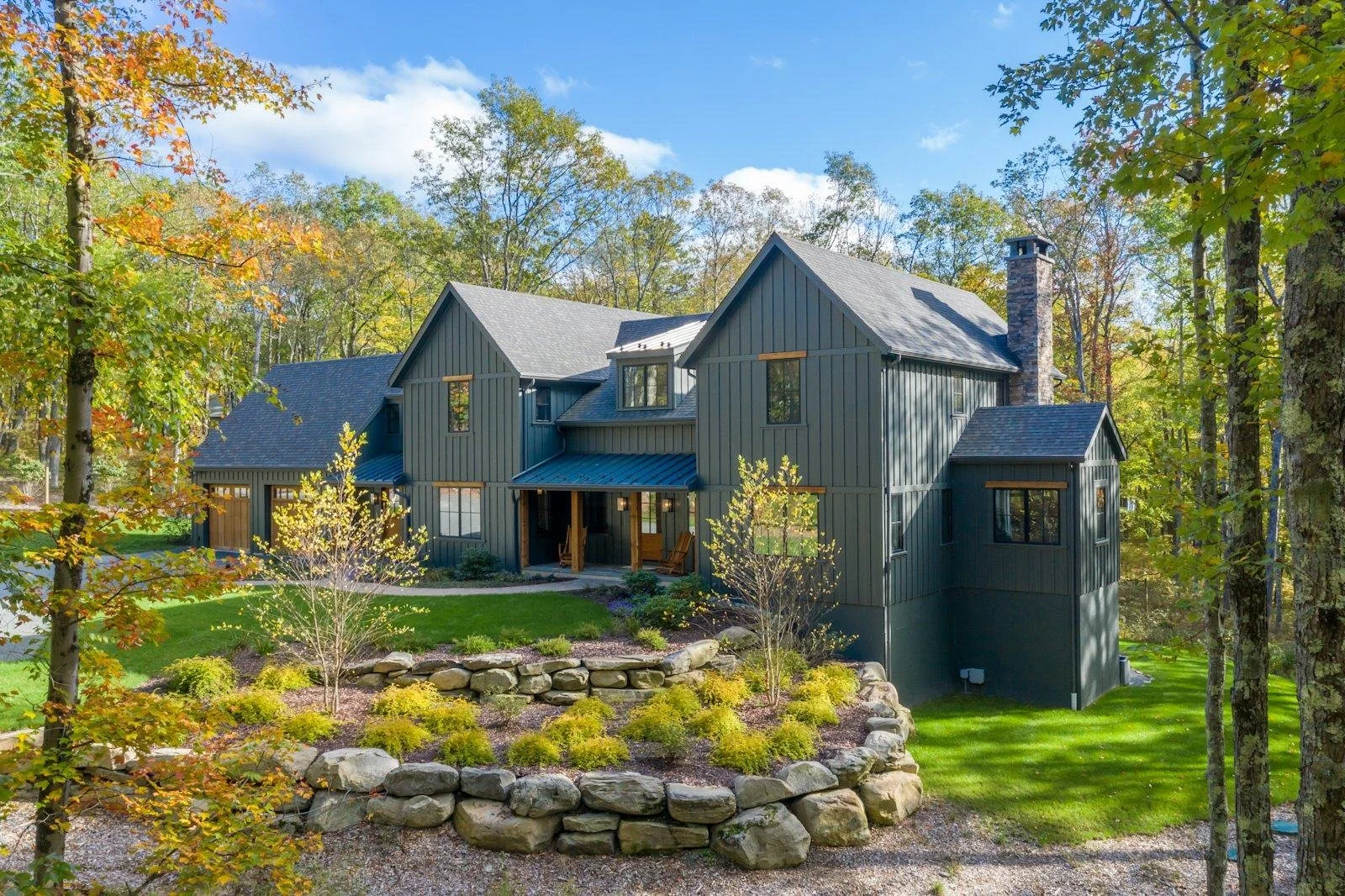
Example image, not a RoofNut project. Photo: James Hardie
James Hardie fiber cement gives you the texture and shadow lines of real wood board and batten without the same upkeep worries. It's backed by a 30-year non-prorated substrate warranty, and the ColorPlus finish carries a 15-year limited warranty. As a James Hardie certified contractor, RoofNut installs it to Hardie's specifications.
Real wood board and batten is beautiful. It also asks a lot of you.
Painting. Sealing. Watching for rot. Repeat.
Fiber cement keeps the character and drops most of the drama.
Built Solid. Looks Sharp. Hardie is a heavier, more substantial product, with crisp edges that make those vertical lines really pop.
Color That Comes Ready. ColorPlus is a factory-applied finish, so your color is chosen and applied before the siding ever reaches your driveway.
Coverage You Can Read. A 30-year non-prorated substrate warranty and a 15-year limited warranty on the ColorPlus finish. Clear terms. No guesswork.
Should I do the whole house or just accents?
All in, or a little nuts. Both work.
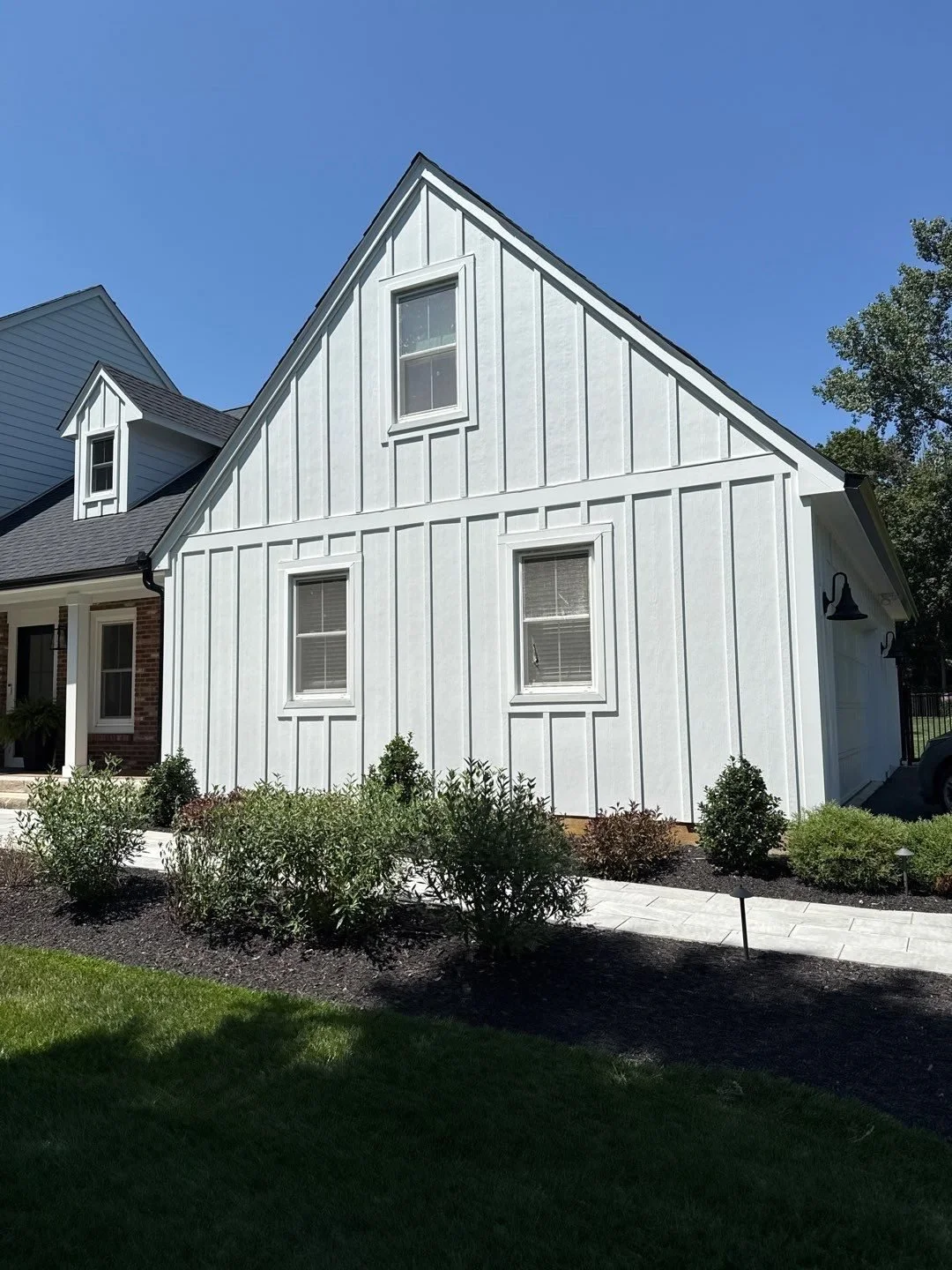
Board and batten on the wing and gables, lap on the main house. A RoofNut project in Dublin. Photo: RoofNut
It depends on your home's style and your goals. Full board and batten suits farmhouse and modern designs. Accents on gables, entryways, or a single wall can add character to a traditional home without a full transformation. Many of the best-looking homes mix board and batten with lap siding for contrast.
This is where a lot of homeowners get stuck.
Full coverage can look stunning. It can also overwhelm a home that wasn't built for it.
Accents are the secret weapon. A board and batten gable above lap siding gives you character, contrast, and curb appeal in one move.
We recently wrapped up a James Hardie project in Dublin that did exactly that. Board and batten on the garage wing, gables, and porch walls. Gray lap siding on the main house. Same house, whole new presence from the street.
How do I know what it will look like before work starts?
Paint chips are tiny. Your house isn't.
RoofNut offers James Hardie 3D design visualization, so you can preview board and batten on a model of your own home. Try different colors, batten spacing, and accent placements before you commit. It takes the guesswork out of one of the biggest design decisions you'll make for your exterior.
Let's be honest. Picking a whole-house look from a 3-inch sample is a little nuts.
Even for us.
So we show you the whole house instead. Full coverage versus accents. Dark versus light. Trim that blends versus trim that pops.
You'll know what you're getting before a single board goes up.
What makes a board and batten install done right?
The pattern is simple. Getting it right isn't.
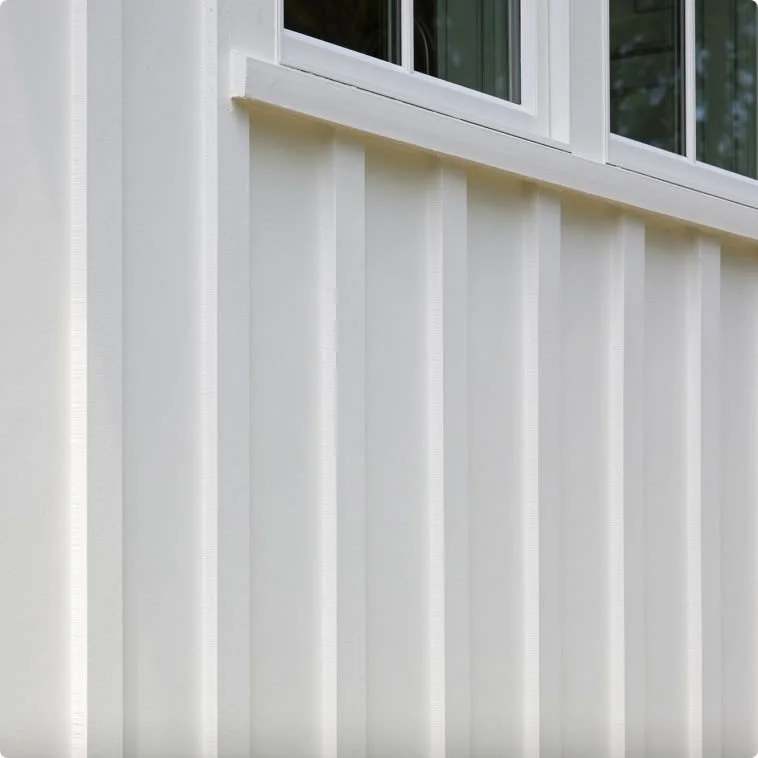
Example image, not a RoofNut project. Even batten spacing. Photo: James Hardie
Good board and batten depends on layout, alignment, and details. Battens need consistent spacing, panels need to line up around windows and corners, and trim and flashing have to manage water correctly. Fiber cement is less forgiving than some materials, which is why choosing a certified, experienced installer matters as much as the product.
Vertical lines are honest. If something's off, everyone can see it.
That's why we plan the layout before the first cut.
Straight Lines. No Shortcuts. Spacing and alignment are mapped out across every wall, so the pattern flows around windows and corners.
Details You Don't See. Work You Can Trust. Flashing, clearances, and fastening follow Hardie's installation specs.
Local Crew. Real Accountability. We live and work in Central Ohio. Our reputation is right down the street.
How much does James Hardie board and batten siding cost?
Fair question. Here's the honest answer.
National cost guides suggest a typical home re-sided in James Hardie siding runs roughly $19,000 to $84,000, depending mostly on size. Board and batten installs run about $20 to $35 per square foot. Vinyl board and batten costs less, around $4 to $10. A free consultation gets you a real number.
What might this cost me?
National averages for homeowners · Not a RoofNut quote
| Your home | Estimated range |
|---|---|
| Small home (~1,500 sq ft), James Hardie | $19,200–$48,000 |
| Medium home (~2,000 sq ft), James Hardie | $27,200–$68,000 |
| Large home (~2,500 sq ft), James Hardie | $33,600–$84,000 |
| James Hardie board and batten, per sq ft installed | $20–$35 |
| Vinyl board and batten, per sq ft installed | $4–$10 |
Every home is different. These are national averages, not RoofNut prices. Your actual cost depends on size, layout, existing siding, and details. Schedule a free consultation for a real number.
Sources: HomeGuide, Fixr. Whole-home ranges cover all James Hardie siding styles. Vinyl range combines HomeGuide ($5–$9) and Fixr ($4–$10). Accessed Oct 15, 2026.
Is there a vinyl option?
Different material. Same goal.
If fiber cement isn't the right fit for your project, vinyl siding is worth a look. RoofNut is a ProVia Certified Installer for vinyl siding, and ProVia vinyl is a lower-maintenance option with plenty of styles. We'll walk you through both materials so you can compare honestly.
We install both. So we'll tell you what actually makes sense.
Can I finance new siding?
Big project. Manageable steps.
Yes. RoofNut offers financing through Sunlight, and applying is a soft credit pull, so checking your options won't affect your credit score. Approval and terms are up to the lender, but it's an easy way to see what's possible before you decide how to move forward.
Frequently Asked Questions
What warranty comes with James Hardie board and batten? James Hardie offers a 30-year non-prorated substrate warranty. The ColorPlus finish carries a 15-year limited warranty.
How much does board and batten siding cost? National averages put James Hardie whole-home projects roughly in the $19,000–$84,000 range by home size, with board and batten around $20–$35 per square foot. Those are averages, not quotes. A free consultation gets you a real number.
Is board and batten siding only for farmhouses? No. It works on modern, craftsman, and traditional homes, especially as an accent.
Can I mix board and batten with lap siding? Yes. Combining the two is one of the most popular ways to add contrast and character.
Can I see the design on my home first? Yes. Our James Hardie 3D design visualization lets you preview colors and layouts before work starts.
Do you work on commercial buildings? No. RoofNut is residential only, serving homeowners in Hilliard, Dublin, Columbus, and across Central Ohio.
Ready to Stand Out?
Tall lines. Straight answers. Local team.
You don't need to know batten spacing or trim profiles. That's our job.
Sit down with us, walk through your home, and get a real number. No pressure.
Board and batten is all about strong lines. So is the way we work: straight answers, clean details, and a team that's a little nuts about getting it right.